Collector-to-seller journey
Card photos, listing types, metadata and a personal collection flow designed around how collectors organize items.
A real multi-seller trading-card marketplace where listing, collecting, paying, and fulfilling an order have to work together—not as disconnected website features.
Public web marketplace live · Android application in testing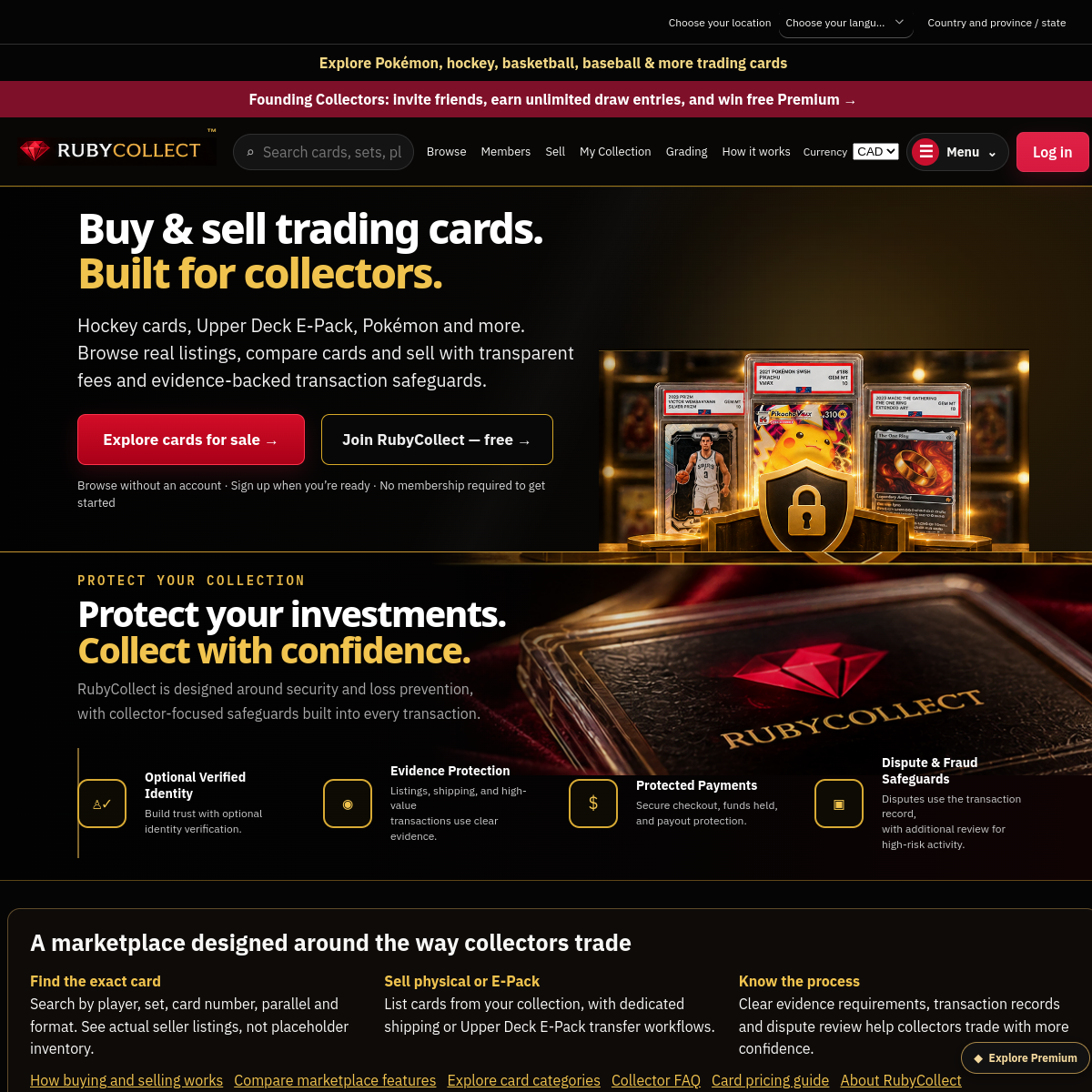
Card photos, listing types, metadata and a personal collection flow designed around how collectors organize items.
Listing prices, auction rules, offers, checkout and the actions required when a buyer or seller changes course.
Seller-specific payout journeys, refunds, signed webhook handling and protection against replayed events were part of sandbox testing.
Verification, moderation, reporting, shipping choices and seller notifications beyond a simple product-detail page.
Image-based identification and pricing research with correction paths when year, set, card number or market comparisons are uncertain.
Identify the minimum journey from photographing a card to receiving an order and completing fulfillment.
Connect listings, search, seller states, offers, auctions and payment workflows.
Exercise checkout, refund, transfer, signed webhook and repeated-event scenarios in a controlled environment.
Use real listing photos and mobile workflows to find cropping, navigation and identity mistakes.
A model may recognize a player but still confuse the year, set or parallel. Comparing structured attributes, images and available market sources is more dependable than trusting one confident answer.
A purchase can be refunded, an offer can be accepted, a shipping quote may change, and the payment provider can retry an event. These conditions need explicit state transitions and test cases.
Each seller needs controls, identity and payout workflows, fulfillment expectations and support paths. The operator needs tools to investigate failed or disputed transactions.
Current status: RubyCollect continues to evolve. Mobile delivery and some integrations remain active work; an Android app in testing should not be described as publicly released.
An owner-controlled renovation record designed to make estimates, revisions, decisions and evidence easier to understand and trace.
Read case study →CASE STUDYCard Scanner APIExploring how a stack of card photographs can become organized, reviewable records while preserving image quality and acknowledging uncertain identification.
Read case study →